
What players say
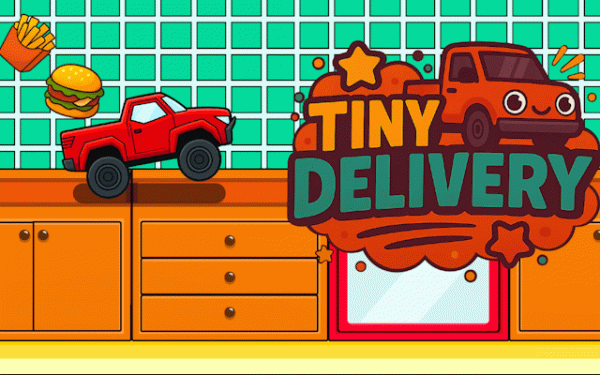
Tiny Delivery: Food Balance Arcade turns ordinary driving into a test of restraint. The food on your vehicle reacts to every bump and turn, so the real skill is anticipating terrain and adjusting speed early. Hills, narrow paths, and moving platforms keep levels from feeling repetitive. The gradual difficulty ramp suits players who prefer planning over twitch reactions. It is not a game for those seeking high-speed chases, but for anyone who enjoys precision tasks, it offers a clear and consistent challenge.
About this game
Delivery Objective and Core Tension
Each level begins with a food order to collect and deliver. The vehicle carries the food, and the main goal is to reach the customer with every item still on board. What makes this different from a standard driving game is that speed and sharp turns work against you. The food slides if you accelerate too hard or tilt the vehicle suddenly. Success depends on reading the terrain and adjusting before the load shifts.
Terrain and Obstacle Design
Routes include hills, bumps, narrow passages, and moving platforms. Hills test your throttle control because climbing too fast can tip the load backward. Bumps require early braking to absorb the jolt. Narrow paths leave little room for error, so you must line up the vehicle before entering. Moving platforms add timing pressure: you need to wait for the right moment and cross at a steady pace rather than rushing. Each environment type changes how you manage speed and steering.
Controls and Platform Access
On-screen controls handle acceleration and braking. There is no separate steering mechanic described beyond what the vehicle does in response to your input, so the challenge comes from smooth speed management rather than complex handling. The game runs on both computers and mobile devices, which makes it suitable for short breaks or longer sessions. The same control scheme applies across platforms, so switching devices does not change how you play.
Difficulty Progression and Player Fit
Levels increase in complexity over time. Early stages likely introduce one obstacle type at a time, while later stages combine hills, bumps, narrow paths, and moving platforms. This gradual ramp rewards patience and precision more than reflexes. Players who enjoy skill-based tasks, strategic route planning, and steady control will find the difficulty curve satisfying. The family-friendly theme and simple controls make it accessible, but the balance mechanic keeps it from being mindless.
✅ Compatibility & Testing
FAQ
Player comments
Sign in to comment
You must be logged in before posting a review or rating.
No comments yet. Be the first to comment!






Editorial Notes