
What players say
Circuit Path focuses on directional connector placement to complete electrical circuits. Its strength lies in a simple rule set that expands into multi-branch routing puzzles. The lack of timers and penalties creates a relaxed, experimentation-friendly pace. Clean visuals and subtle feedback keep attention on the board. It suits players who enjoy spatial reasoning and gradual difficulty. The main limitation is that the input does not describe audio or advanced features, so the experience appears purely mechanical.
About this game
Core Puzzle Mechanics
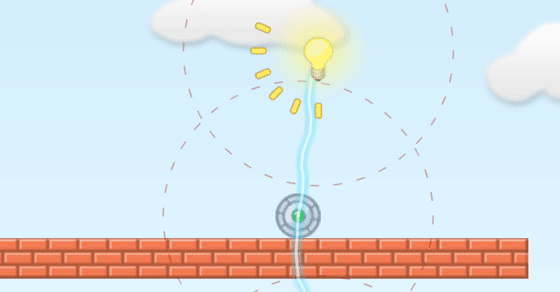
Circuit Path builds its challenge around one rule: energy must travel from a power source to a target device without interruption. Players place directional connectors on available slots, and each connector has defined entry and exit points. A connector that fits one slot may be useless in another because its orientation determines which way energy flows. This constraint turns simple placement into a spatial reasoning task. Early boards accept a single correct route, but later layouts introduce multi-branch paths where several connectors compete for the same slots. Unlimited attempts and instant restarts remove any penalty for experimentation, so players can test an idea, observe the failure point, and adjust immediately.
How Difficulty Expands
The game introduces new layouts gradually. Initial stages teach basic placement and orientation, while later puzzles require considering multiple possible routes before committing to a connector. Each level builds on concepts from previous ones, so the difficulty curve feels natural rather than abrupt. Because there are no timers or penalties, players can pause to trace a path mentally or work through trial and error at their own pace. The absence of a fail state makes the game suitable for younger players and adults alike, though later puzzles still demand careful planning.
Visual Design and Feedback
Clean lines and soft colors keep the board readable. Connectors and targets are clearly labeled, so components are easy to identify at a glance. The background stays uncluttered, which helps players focus on the puzzle rather than decorative elements. When a circuit is completed, subtle animations provide satisfying feedback without distracting from the next challenge. The interface is optimized for both mouse and touch input, making the game work well on computers and mobile devices. Sessions can be as short as a few minutes or extend into longer play periods, depending on how many puzzles a player wants to solve in one sitting.
✅ Compatibility & Testing
FAQ
Player comments
Sign in to comment
You must be logged in before posting a review or rating.
No comments yet. Be the first to comment!








Editorial Notes