
What players say
Block Parkour Racing Club mixes real-time multiplayer racing with block-built obstacle courses, and its clearest strength is the tension between speed and precision. Water hazards end runs instantly, so players must learn each map's layout rather than guess. Coins from fast finishes fund cosmetic skins, while a global leaderboard gives times a lasting target. It suits players who enjoy timed platforming and route optimization more than those seeking deep customization.
About this game
Course Design and Movement
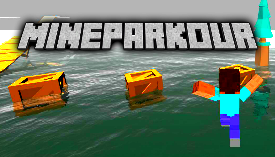
Each map in Block Parkour Racing Club is built from block-style geometry and arranged as a timed obstacle course. The layout changes from track to track, so the hazards and the safest route are never identical. Water is one of the few confirmed hazards: touching it ends a run outright, which makes every jump over a gap or pool a commitment. Because the goal is to reach the finish line before the clock runs out, players are constantly weighing speed against the risk of a mistake.
Controls and Racing Feel
Movement uses standard keys such as WASD or arrow keys, and jumping is bound to the spacebar. That control scheme is simple, but the game asks for precision rather than button-mashing. Rushing a jump or taking a corner too fast can send a character into water or off the intended path, so careful timing matters as much as raw speed. Races happen against other players in real time, which means a single slip can cost a position even if the rest of the run is clean.
Coins, Skins, and Leaderboards
Fast finishes pay out coins, and those coins are spent in a shop on character skins. The skins are cosmetic, so they personalize a racer without changing how the course plays. A global leaderboard tracks best times and ranks players against one another, giving the coin economy and the race results a longer-term target than any single match. Between the shop and the leaderboard, there is a reason to keep replaying maps after a first clear.
Learning the Routes
Since every map has its own obstacle arrangement, memorizing layouts is the most direct way to improve. Knowing where a water hazard sits lets a player plan the jump before reaching it, and knowing which path is shortest helps shave off the seconds that decide a close race. The game rewards that kind of route knowledge alongside reflexes, so a player who studies a course can often beat someone who only reacts.
Compatibility
FAQ
Player comments
Sign in to comment
You must be logged in before posting a review or rating.
No comments yet. Be the first to comment!

Editorial Notes