
What players say
Deep Blue Descent builds its challenge around three interconnected resources that drain simultaneously, forcing players to make meaningful decisions about speed, risk, and preparation. The trial-and-error structure rewards patience and observation rather than reflexes. Players who enjoy methodical planning and gradual mastery will find the upgrade system and variable obstacle layouts compelling. The historical wreck site adds context without overwhelming the core management loop. The main limitation is that the input does not specify multiplayer or additional modes, so the experience appears to be a focused single-player simulation.
About this game
Triple-Resource Survival Loop
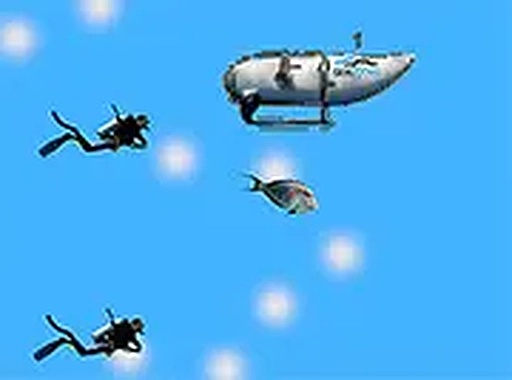
Every descent in Deep Blue Descent hinges on three depleting resources: fuel, hull integrity, and oxygen. Fuel consumption rises with speed, so moving quickly burns through reserves faster. Hull integrity erodes under water pressure and from collisions, requiring repairs made from materials collected during the dive. Oxygen reserves tick down continuously, capping how long any attempt can last. Because all three drain simultaneously, players face constant trade-offs. Sprinting past an obstacle saves time but costs fuel and risks hull damage. Slowing down conserves fuel but extends exposure to oxygen depletion. No single resource can be ignored for long.
Reading the Descent Path
The route downward is never a straight line. Underwater currents push the vessel off course, and debris fields create collision hazards. Players must interpret the environment and adjust speed in response. Moving too fast through a debris cluster risks structural damage; moving too slowly wastes fuel and oxygen. Because each dive combines these obstacles differently, memorizing a single route does not work. Instead, players learn to read visual cues and make split-second adjustments. This variability encourages adaptive planning rather than rote repetition.
Upgrades and Pre-Dive Choices
Between dives, players invest limited resources into improving the submersible. Reinforcing the hull allows it to withstand greater depths and absorb more collision damage. Upgrading the engine improves fuel efficiency and gives finer speed control. Enhanced life support extends the duration of safe operation. Since resources are scarce, not every system can be fully upgraded at once. These choices shape the overall strategy: a player who prioritizes hull strength may take more risks, while one who invests in life support can afford longer, slower descents.
Learning Through Failure
Failure is built into the structure. Each failed attempt reveals new information about the underwater environment and the vessel's limits. Players refine their approach based on what worked and what did not, gradually building a mental model of how currents, debris, and resource drain interact. This trial-and-error loop rewards patience and careful observation. A successful descent feels earned because it reflects accumulated knowledge, not luck.
Historical Context and Educational Elements
The ultimate destination is a historically significant wreck site, which gives the descent a real-world anchor. The game weaves in elements of ocean science and maritime history, presenting these facts naturally during gameplay. This educational layer enriches the experience without overshadowing the core management mechanics. Players learn about the underwater environment as a byproduct of trying to survive it.
Compatibility
FAQ
Player comments
Sign in to comment
You must be logged in before posting a review or rating.
No comments yet. Be the first to comment!









Editorial Notes