
What players say
Hide and Seek 3D Puzzle Game succeeds by keeping its scope tight. The role-choice mechanic, footprint clues, and 3D hiding spots create enough variety for short sessions, and the family-friendly design removes barriers for younger players. The main limitation is depth: without a progression system or story, the appeal depends on how much you enjoy the core loop of hiding and seeking. It is best suited to casual players and families looking for light competition.
About this game
Role Choice and Round Flow
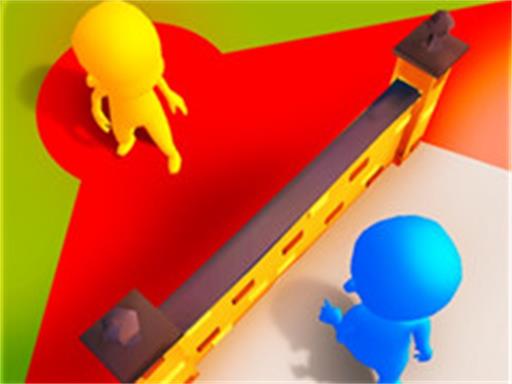
Every round begins with a simple decision: play as the seeker or the hider. That choice shapes everything that follows. Seekers rely on visual clues, primarily footprints left on the ground, to locate opponents before time expires. Hiders must read the environment, pick a spot, and stay still. Rounds are short and self-contained, so a bad decision costs only a few minutes, not a long-term setback. The game does not layer on complex rules or menus; the tension comes from the cat-and-mouse dynamic itself.
Reading the 3D Space
The three-dimensional environments are built around hiding potential. Corners, furniture, and shadowed areas give hiders options, while open ground makes movement risky. Seekers benefit from scanning for footprint trails and watching for slight movement. Because the camera and level layout change from round to round, memorizing one perfect hiding spot does not guarantee success. Spatial awareness matters more than reflexes, which keeps the game approachable for younger players and adults alike.
Controls and Accessibility
Controls are intentionally simple, letting players focus on observation and timing rather than input complexity. Moving, stopping, and choosing a hiding position are straightforward actions. This design supports the family-friendly goal stated in the game's description: anyone can join without a tutorial. The lack of violent content and the bright, colorful graphics reinforce that this is a casual experience meant for mixed-age groups.
What Keeps Rounds Interesting
Each round presents a fresh challenge because hiding spots and opponent strategies vary. A hider who camped behind a couch last time may need to improvise when the seeker checks there first. Seekers, meanwhile, learn to interpret footprint patterns and anticipate common hiding habits. That back-and-forth creates light competition without requiring a story campaign or unlock system. The appeal is the same as the childhood game: outsmarting someone in a confined space with a time limit.
Compatibility
FAQ
Player comments
Sign in to comment
You must be logged in before posting a review or rating.
No comments yet. Be the first to comment!




Editorial Notes