
What players say
Fortress Commander: Strategic Warpath delivers a satisfying blend of tactical combat and resource planning. The hero system adds meaningful variety to each playthrough, while the terrain mechanics encourage creative positioning. The campaign's steady difficulty curve keeps players engaged without becoming frustrating. Resource management between battles forces tough but fair decisions. This is a solid choice for anyone who enjoys slow-paced strategy games that emphasize thinking over speed.
About this game
Core Command Loop
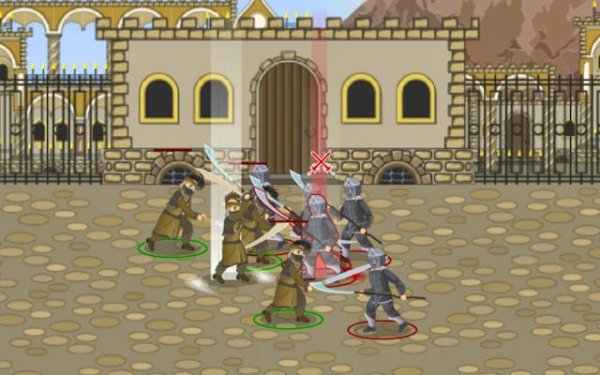
At its heart, Fortress Commander: Strategic Warpath is about making thoughtful decisions before and during each encounter. Players begin by selecting a leader from a small roster, each bringing a distinct set of bonuses that influence how units perform. The battlefield is presented as a grid-like map where terrain features such as hills, forests, and rivers affect movement and combat effectiveness. Every action, from moving a unit to launching an attack, consumes a turn. This structure gives players the freedom to evaluate positions and predict enemy movements without feeling rushed. The game rewards those who take time to study the layout and adjust their approach accordingly.
Hero Selection and Influence
Choosing the right hero is more than a cosmetic decision. Each hero in Fortress Commander: Strategic Warpath provides a unique modifier that can shift the balance of a fight. Some heroes might improve the defensive capabilities of nearby units, while others could grant a speed bonus or enhance ranged attacks. The hero also has a special ability that can be used once per battle, often turning a losing position into a winning one. Players are encouraged to try different heroes to see how their playstyle changes. This system adds a layer of replayability, as the same map can feel completely different depending on who is leading the army.
Unit Roles and Terrain Dynamics
Success in this game depends on understanding how different units interact with each other and with the environment. Melee units are best suited for holding front lines and absorbing damage, while ranged units deal significant damage from a distance but are vulnerable when attacked directly. Fast-moving units can flank enemies or capture key positions. Terrain plays a major role: placing archers on elevated ground increases their range, while forests provide cover for ambushes. Rivers and bridges create chokepoints that can be used to control enemy movement. Learning these interactions is essential for progressing through the campaign.
Resource Allocation Between Fights
Between battles, players manage a limited pool of resources earned from previous victories. These resources can be spent on upgrading existing units, unlocking new unit types, or enhancing the hero's abilities. There is no single correct path; players must decide whether to strengthen what they have or diversify their forces. This resource management layer adds a strategic dimension that extends beyond individual fights. The choices made here directly affect the difficulty of upcoming battles, as a well-upgraded army can overcome poor positioning, while a neglected force will struggle even with perfect tactics.
Campaign Structure and Progression
The campaign in Fortress Commander: Strategic Warpath consists of a series of linked encounters, each with its own objectives and enemy compositions. Early battles serve as tutorials, introducing core mechanics and unit types. Later stages require players to combine all the skills they have learned, often presenting scenarios where resources are scarce or the terrain is particularly challenging. The difficulty curve is steady, ensuring that new players are not overwhelmed while still offering a satisfying challenge for experienced strategists. Completing a battle unlocks the next stage and provides resources for upgrades, creating a continuous loop of planning, action, and improvement.
Player comments
Sign in to comment
You must be logged in before posting a review or rating.
No account? Create one
No comments yet. Be the first to comment!