
What players say
Fortress Commander: Strategic Warpath focuses on deliberate tactical decisions rather than reflexes. The hero system adds replay value because each leader changes how units perform, and terrain interactions give positioning real weight. Between-battle resource management extends strategy beyond individual fights. The steady difficulty curve suits players who enjoy planning ahead, though those seeking fast-paced action may find the turn-based pace slow.
About this game
Command Flow and Turn Structure
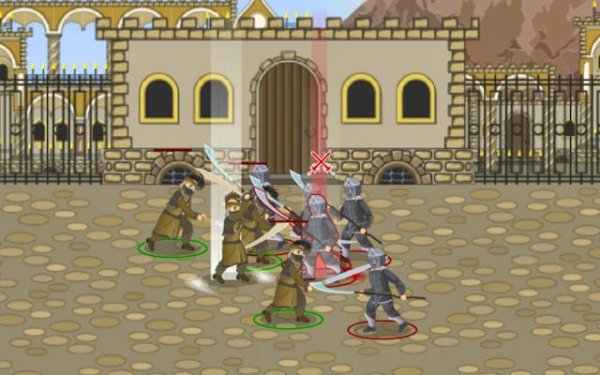
Fortress Commander: Strategic Warpath builds its encounters around deliberate decision-making. Each battle takes place on a grid-based map, and every action a player takes — repositioning a unit, launching an attack — uses up a turn. That turn cost gives players room to read the board, weigh options, and anticipate what the opponent will do next, rather than reacting under time pressure. The game rewards patience: studying the layout and adjusting the plan mid-fight matters more than rushing forward.
Hero Selection and Battle Impact
Before each encounter, players choose a leader from a small roster. Each hero carries a distinct modifier that changes how nearby units perform — some boost defense, others add speed or strengthen ranged attacks. A hero also brings one special ability usable once per battle, which can flip a losing position. Because the same map plays differently depending on who leads the army, experimenting with different heroes adds replay value and shifts how the player approaches each fight.
Units, Terrain, and Positioning
Unit roles are clearly separated. Melee units hold front lines and absorb damage, ranged units deal heavy damage from a distance but fold quickly when attacked directly, and fast units flank enemies or grab key positions. Terrain reinforces these roles: archers on elevated ground gain range, forests provide cover for ambushes, and rivers or bridges create chokepoints that control enemy movement. Understanding how units and terrain interact is the core skill the campaign tests.
Resource Planning Between Battles
Victories yield a limited pool of resources, and players decide how to spend them: upgrading existing units, unlocking new unit types, or improving the hero's abilities. There is no single correct path. Strengthening what you already have competes with diversifying your forces, and that choice directly shapes how hard the next battle feels. A well-upgraded army can survive poor positioning, while a neglected one struggles even with sharp tactics.
Campaign Structure and Difficulty Curve
The campaign strings together linked encounters, each with its own objectives and enemy compositions. Early battles work as tutorials, introducing core mechanics and unit types. Later stages combine everything learned so far, often under scarce resources or punishing terrain. The difficulty rises steadily, so newcomers are not overwhelmed while experienced strategists still get a real test. Finishing a battle unlocks the next stage and supplies resources for upgrades, forming a continuous loop of planning, fighting, and improvement.
Compatibility
FAQ
Player comments
Sign in to comment
You must be logged in before posting a review or rating.
No comments yet. Be the first to comment!
Editorial Notes