
What players say
Hexagonal Domain Control focuses on the tension between growing fast and holding what you take. Wood and stone fund defenses, but spending them early can stall expansion. Alliances add a social layer that rewards communication and reliability. The real-time pace and shifting map keep matches varied. Players who enjoy tactical positioning, resource trade-offs, and cooperative negotiation will find the most to engage with here.
About this game
Claiming the Grid
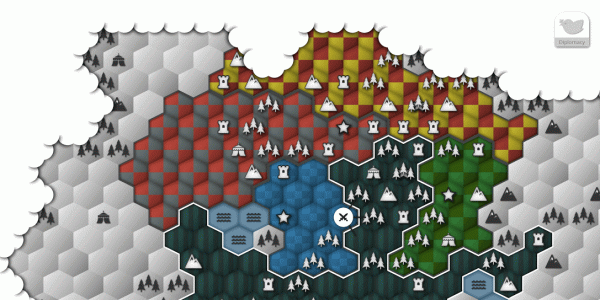
Players start with a single home plot on a hexagonal map. From there, the objective is straightforward: claim adjacent cells to grow your domain. Each captured hexagon yields additional resources, which can be funneled into defenses or used to fund further expansion. The grid itself is not neutral ground—its geometry creates natural chokepoints and strategic corridors. A narrow pass between two clusters of hexes can become a fortress or a fatal bottleneck depending on how you read the board. Thinking several moves ahead matters more than reacting to the last capture.
Wood, Stone, and the Cost of Overreach
Wood and stone are the primary materials drawn from claimed territories. These resources pay for defensive structures that shield key areas from enemy incursions. The central tension is timing: fortify now and you may stall your growth, or save materials for a larger project and risk leaving your borders thin. Overextending is a real vulnerability, because a stretched domain is harder to defend against coordinated attacks. Watching an opponent's building patterns can reveal whether they are preparing to turtle up or push outward, giving you a read on their intentions before they commit.
Alliances as a Strategic Layer
Forming alliances is not a side feature—it is a core part of the experience. Allies can share resources, coordinate movements, and defend each other's territories. Trust and communication determine whether a pact holds under pressure, because alliances can shift the balance of power on the map. Working with reliable partners enables more ambitious expansion plans and provides mutual protection against larger threats. The catch is maintenance: alliances require ongoing cooperation, and players must be ready to support their allies when it counts. A neglected pact is worse than no pact at all.
Reading the Flow of a Match
Every move on the hexagonal grid carries weight. Claiming a new hexagon, building a defensive tower, or reinforcing an ally are all decisions with trade-offs. The game rewards players who adapt their plans based on enemy movements and resource availability. Because the game runs in real time, opponents are acting constantly, forcing you to think on your feet. The map evolves as territories change hands, so no two matches play out the same way. Players who can read the flow of the game and anticipate rival strategies gain a significant advantage. Over time, you develop a sense of timing and priority that separates successful commanders from those who struggle—and observing patterns from match to match is the main way to improve.
Compatibility
FAQ
Player comments
Sign in to comment
You must be logged in before posting a review or rating.
No comments yet. Be the first to comment!


Editorial Notes