

What players say
Singularity 21 stands out by requiring exactly three players and giving each side different tools. The android pair must communicate and plan; the human must react and anticipate. This creates a social, non-violent competition suited to families and casual groups. The main limitation is the fixed player count, which makes it less flexible for solo or larger gatherings. The tutorial page covers rules and controls, so new groups can start quickly.
About this game
Two Roles, One Table
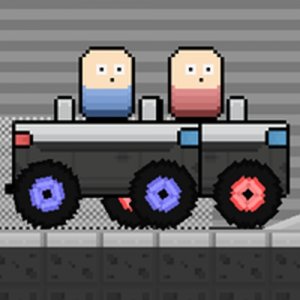
Singularity 21 splits three players into opposing sides that play by different rules. Two players control androids who must coordinate their actions to complete objectives and gain freedom. The third player takes the human role, using speed and awareness to block the androids' progress. The asymmetry means each side has distinct strengths and weaknesses, so no single strategy works for everyone. The androids rely on communication and planning; the human relies on quick reactions and anticipating where the androids will move next. [IMG_1]How a Session Unfolds
Before starting, three players gather around one compatible device. The androids share a common goal and must work in tandem, while the human tries to outmaneuver them. The game menu contains a tutorial page that explains the controls, rules, and winning conditions. Because the rules are simple, new players can join quickly, but the role asymmetry gives experienced groups room to refine their approach over repeated sessions. [IMG_2]Built for Group Play
Designed for local multiplayer, Singularity 21 targets game nights, family gatherings, and casual sessions. The family-friendly, non-violent design keeps competition focused on strategy and communication rather than combat. Simple controls lower the barrier for younger or less experienced players, while the need for teamwork and planning provides enough depth to hold the interest of seasoned gamers. [IMG_3]Approaching Each Role
Androids benefit most from clear, constant communication: call out intentions, coordinate movements, and avoid the human's detection. The human should use superior speed and awareness to cut off android progress before it reaches a critical point. Practicing both roles helps players understand each side's strengths and weaknesses, which in turn makes the asymmetric balance feel fairer and more interesting. [IMG_4]Compatibility
✅ This game supports:
- Desktop browsers (Chrome, Edge, Safari)
- Mobile browsers (Chrome on Android, Safari on iOS)
❌ Does NOT support: - Internet Explorer - Very old browser versions
👉 Try refreshing or updating your browser
FAQ
How many players does Singularity 21 support?
The game is built for exactly three players: two control the androids and one plays as the human. It is a local multiplayer experience, so all three players share the same device rather than connecting online. This fixed player count is central to the asymmetric design.
Do I need special equipment to play Singularity 21?
No special equipment is required. You only need a compatible device and three players willing to participate. The game runs as a local multiplayer title, so there are no extra controllers, boards, or accessories mentioned in the official description. Just gather three people and start a session.
Is Singularity 21 suitable for children?
Yes. The game is described as family-friendly and suitable for all ages, with a non-violent design. Competition centers on strategy, communication, and problem-solving rather than combat. Simple controls also make it accessible to younger players, though the android role may require more coordination than younger children can manage alone.
What is the difference between the android and human roles?
Androids must cooperate to complete objectives and achieve freedom, relying on wit and teamwork. The human player works alone, using cunning and quick reflexes to prevent the androids from succeeding. Each role has distinct advantages, which is what makes the game asymmetric. Practicing both helps you understand the balance.
Where can I learn the rules and controls?
The game menu includes a tutorial page that explains the controls, rules, and winning conditions. It is the primary reference for new players. Because the game is easy to learn but offers depth for repeated play, the tutorial should be enough to get a group started without outside instruction.
Is Singularity 21 a violent game?
No. The game emphasizes non-violent competition and fair play. Androids avoid violent actions and rely on cooperation and problem-solving, while the human uses speed and awareness rather than force. This design makes it appropriate for family gatherings and inclusive group settings where players of different ages participate together.
Player comments
Sign in to comment
You must be logged in before posting a review or rating.
No comments yet. Be the first to comment!





Editorial Notes