
What players say
Dual Airborne Ascent builds its challenge around a single idea: two balloons that move as one. That constraint makes alignment matter as much as reflexes, and the four fire types add a matching layer that rewards quick assessment over button mashing. Bright visuals and color-shifting skies keep the screen readable, while randomized obstacles and short sessions support repeated attempts. It is best suited to players who enjoy precision and coordination rather than narrative or exploration.
About this game
One Unit, Two Balloons
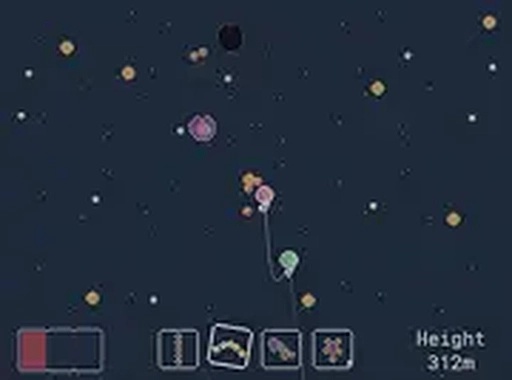
In Dual Airborne Ascent, the two balloons are not controlled separately. They share a single movement path, so every directional input shifts both at once. That connection turns ordinary navigation into a coordination problem: if one balloon drifts out of alignment, the pair cannot pass cleanly through gaps or around hazards. The challenge is not steering one object well, but keeping two objects in a usable formation while the screen keeps moving upward.
Fire Types as a Matching Tool
Each balloon carries one of four fire types at any moment, and those types are not interchangeable. A specific hazard calls for a specific fire type, so the core loop alternates between reading what is ahead and switching to the correct response. Because both balloons share the same ascent, a wrong fire choice on one side can leave an obstacle intact and disrupt the whole climb. This is where the game shifts from pure reflex to quick assessment and decision-making.
Difficulty That Builds With Altitude
Obstacles grow more frequent and more varied as the balloons climb. Early attempts introduce simple hazards at a manageable pace, giving new players room to learn the alignment and fire-switching basics. Higher sections demand faster recognition and cleaner inputs, so the same mechanics that felt forgiving at the start become a test of precision. The curve is steady rather than sudden, which keeps both cautious and experienced players engaged without a hard wall.
Clean Visuals, Short Runs
The presentation is bright and uncluttered. The sky background changes color as the balloons rise, giving visual feedback on progress, while the balloons and obstacles remain easy to tell apart. Each run generates a fresh obstacle arrangement, so no two attempts follow the same pattern. Sessions are short by design, which suits quick breaks, but the escalating challenge and randomized layouts give players a reason to try again for a higher climb.
Compatibility
FAQ
Player comments
Sign in to comment
You must be logged in before posting a review or rating.
No comments yet. Be the first to comment!


Editorial Notes